Avoid Cash Home Buyer Scams
Without Losing Your
Quick Sale Opportunity
Finally, Protection Built for Homeowners Who Need to Sell Fast
Selling your home fast shouldn’t mean losing your equity to a scammer. If you’re facing foreclosure, going through a divorce, or dealing with sudden financial pressure, you already know the stress of needing a quick cash sale. What you may not realize is that scammers are actively watching for homeowners in exactly your situation-and they’re very good at what they do.
Here’s the good news: legitimate cash buyers absolutely exist and provide real value. According to LegalClarity, about 30% of U.S. home purchases in late 2025 were all-cash deals. These include real estate investors, iBuyers, and individual buyers who can close quickly and reliably, but you still need clear communication and careful verification throughout the broader home purchase process.
The problem isn’t the cash sale process itself. The problem is that fraudulent operators have learned to mimic every part of that process-from professional websites to convincing documentation-so they look indistinguishable from legitimate companies until it’s too late.
This page gives you everything you need to sell quickly AND safely. You’ll learn exactly how cash home buying scams work, what red flags to watch for, and how to verify that you’re dealing with a legitimate cash buyer before you sign anything.
Why Cash Home Buyer Scams Are So Effective
Cash home buyer scams succeed because they exploit something deeply human: the need for fast relief during a crisis.
When you’re behind on mortgage payments, facing a tax lien, or navigating a painful divorce, an unsolicited cash offer that promises to close in 7 days feels like a lifeline. Scammers know this. They deliberately target property owners in distressed situations by monitoring public records for foreclosures, tax delinquency notices, and death records.
What makes these scams particularly dangerous is how convincingly they mimic real real estate transaction practices:
Professional marketing – “We Buy Houses” billboards, polished websites, and branded mailers that look identical to what legitimate investors use
Convincing documentation – Fake bank logos, fabricated proof of funds letters, and copied license numbers that pass a casual glance
Targeted outreach – Unsolicited cash offers arriving by mail, phone calls, or online ads at the exact moment you’re most vulnerable
Urgency language – Phrases like “this offer expires today” or “we can only hold this price for 48 hours” that create a false sense of scarcity
High-pressure sales tactics indicate potential fraud, yet they work precisely because homeowners under stress are less likely to seek a second opinion or consult a real estate professional. The promise sounds too good to be true-but when you’re desperate, it also feels necessary.
How Cash Home Buyer Scams Actually Work
Understanding the mechanics of these scams is your strongest defense. Nearly every cash home buying scam follows a three-stage pattern.
Step 1: The Bait – Attractive Initial Contact
It starts with contact you didn’t ask for. Unsolicited cash offers are common real estate scams-arriving as mailers, cold phone calls, text messages, or targeted online ads claiming “instant offer,” “sell your home in 7 days,” or “no inspections needed.”
The initial cash offer is designed to grab your attention immediately. It often appears to match or exceed your asking price, which plays directly on your hopes. Scammers often demand fast action to prevent you from researching them, creating artificial deadlines that make you feel like you’ll lose the deal if you pause to think.
Red flags include buyers making offers without seeing the house in person. A legitimate cash buyer will almost always want to inspect or at least view the property before committing real money.
Step 2: The Hook – Building False Trust
Once you respond, the scammer shifts to building credibility. They’ll present professional-looking credentials, mention a registered LLC, and may provide references-sometimes entirely fabricated. Their business model revolves around appearing legitimate just long enough to get you to commit.
During this phase, watch for these warning signs:
Requests for personal or financial information early in the conversation-social security numbers, bank account details, or property deed history before any contract exists
Pressure to sign immediately with language like “this offer expires if you don’t act now”
Inconsistent communication-changing contact numbers, vague answers about their company, or reluctance to meet in person
Inconsistent communication from buyers may suggest fraud. If the person you’re dealing with can’t maintain a consistent verified phone number, physical address, or company identity, that’s a serious red flag.
Step 3: The Steal – Multiple Scam Variations
This is where the actual theft occurs. Common real estate scams at this stage include:
Upfront fee schemes – They demand you pay upfront for inspections, processing, title searches, or “holding” the offer, and may send a fake cashier’s check to pressure you into refunding or wiring money before the fraud is discovered. Legitimate buyers do not charge upfront fees for processing or evaluations. If anyone asks you to send earnest money or pay money upfront before closing, walk away.
Title transfer tricks – You’re asked to sign a quitclaim deed or power of attorney that transfers ownership before payment is confirmed. The scammer gains control of your property while you remain liable for mortgage payments and taxes.
Fake escrow companies – Scammers set up fraudulent escrow operations with forged settlement statements. You believe the real estate transaction is proceeding normally, but no real neutral third party is involved. Fake escrow companies are a common scam in real estate.
Bait-and-switch offers – The initial offer seems strong, but just before closing, the buyer claims an inspection revealed problems and drops the price dramatically. Vague contracts are a red flag for scams because they leave room for exactly this kind of manipulation.
Wire fraud – Hackers intercept email communications to send fraudulent wire transfer instructions. Never wire money based solely on emails containing wiring instructions. Always confirm wire instructions by calling a number you’ve independently verified.
What Makes Legitimate Cash Buyers Different
Not every company that wants to buy houses for cash is running a scam. Legitimate investors, iBuyers, and real estate investors operate transparently and follow established legal processes. Here’s what separates them from fraudsters:
Verifiable proof of funds – Legitimate cash buyers provide proof of funds-a bank letter or recent statement showing liquid assets sufficient to cover the full purchase price plus closing costs. The document should show the buyer’s name, the financial institution, a recent date (within 30 days), and an adequate balance. Buyers who can’t provide proof of funds are likely scams.
No upfront fees – Legitimate buyers never ask you to pay upfront for anything. Closing costs, title searches, and appraisals are handled at closing or covered by the buyer.
Licensed professionals – Real cash buyers use a licensed title company or escrow company and often work with real estate attorneys. Proper inspections and standard closing controls help protect both the buyer and the lender when fraud risks are being screened. You should be able to independently verify credentials of every party involved.
Reasonable timelines – Real cash buyers can close quickly, usually within 7 to 21 days, but they don’t use extreme pressure. They give you time to review documents, consult a financial advisor, and make informed decisions. If someone demands you sign immediately without any review period, that’s a high-pressure tactic designed to prevent you from thinking clearly.
Verifiable track record – Legitimate companies have online reviews, Better Business Bureau ratings, a physical address, and references from recent sellers you can actually call. Verification of buyer details can include checking their business registration with your state’s secretary of state office.
Real Examples of Cash Buyer Scams in Action
Understanding how real victims have been affected makes these risks concrete.
The Scale of Real Estate Fraud: FBI reports indicate over 58,000 victims lost a combined $1.3 billion to real estate fraud between 2019–2023, including deed fraud, forged deeds, and fake property transfers. Key scams include wire fraud and deed fraud, and selling to scammers could result in loss of earnest money or property.
The “No Cash” Scam: The “No Cash” scam involves buyers without actual funds. They present fabricated proof of funds, get you to sign a purchase contract, and then either assign the contract to a third party for a fee (wholesale flip) or delay closing until you’re so invested you accept a dramatically lower price. Many sellers end up losing weeks or months and accepting a fraction of their home’s market value.
Deed Fraud and Title Theft: Scammers forge ownership documents to sell properties they do not own. They may record fake deeds at the county recorder’s office, change mailing addresses for tax bills, and take out loans against your property-all without your knowledge. These deed scams often target elderly homeowners or vacant properties.
Foreclosure “Rescue” Schemes: Homeowners falling behind on payments are approached with offers to “save” their home. They sign documents they believe are temporary arrangements but actually transfer title. The homeowner loses both the property and any payments they’ve made.
Wire Fraud Targeting Home Sales: Wire fraud involves hackers intercepting email communications to send fraudulent wire instructions. A homeowner preparing to close receives what appears to be legitimate wire transfer instructions from their title company, but the account belongs to the scammer. Once funds are wired, they’re nearly impossible to recover. If you receive wire instructions via email, contact your bank immediately using a phone number you’ve verified independently.
Seller Sentiment: A 2025 study by Clever Real Estate found that 61% of recent sellers view cash buyer companies as scams, 38% call them the worst way to sell a home, and over 25% regret selling via cash buyers-citing being underpaid, hidden fees, or deceptive practices.
Who Is Most at Risk for These Scams
While anyone can fall victim to a real estate scam, certain groups face heightened risk:
Homeowners facing foreclosure – The urgency of saving their home makes them susceptible to “rescue” offers that promise fast cash or debt relief. Scammers use rescuing language specifically designed for this audience.
Elderly property owners – Often holding significant home equity and less familiar with modern real estate processes, older homeowners are particularly targeted in deed fraud and high pressure tactics schemes.
Inherited property owners – Those who’ve never navigated a home sale process before may lack knowledge about title requirements, deed records, or standard closing procedures, making them easier to mislead with vague contracts.
Divorce situations – When one or both parties want to liquidate quickly and move on, the emotional urgency can override careful verification. Scammers exploit this desire to close the chapter fast.
Out-of-state property owners – Managing a remote sale means relying on mail, email, and phone calls rather than in-person verification-creating opportunities for impersonation and document fraud. Fake listings often ask for upfront fees or deposits before showing the property, and remote owners are less able to verify what’s happening on the ground.
Your Scam Protection Checklist
Use this step-by-step checklist to protect yourself at every stage of the home sale process. Taking time for verification is the single most important thing you can do to avoid falling victim.
Before Any Contact – Preparation Steps
Know your property’s value – Research your local market independently using MLS comparables, recent sales data, and professional appraisals. Understanding your home’s full market value makes it much harder for anyone to pressure you into accepting a lowball or suspiciously high offer.
Identify trusted professionals – Find a licensed real estate professional and real estate attorney in your area before you need one. Having professional advice available means you won’t make rushed decisions under pressure.
Monitor your property records – Subscribe to notifications from your county recorder or clerk’s office. Set up alerts for any changes to your deed, tax records, or property ownership. This helps you catch unauthorized activity early.
During Initial Contact – Verification Requirements
Demand written proof of funds – Require a bank letter or recent statement showing the buyer’s name (matching the entity on the contract), the financial institution, a date within the last 30 days, and a balance sufficient for the price plus estimated closing costs. Remember: unsolicited cash offers are common scam indicators.
Verify the business – Check business licenses, state registration, Better Business Bureau ratings, and online reviews. Look for a real physical address-not just a P.O. box. If you can’t verify credentials through independent sources, don’t proceed.
Request seller references – Ask for contact information from recent sellers of comparable properties in your area. Call them and ask about their experience with the sale process.
Watch for assignment language – “And/or assigns” in a contract indicates a wholesale arrangement, not a direct buyer. Transparent disclosure of assignment is required in many states. This isn’t automatically a scam, but you need to know who will actually be purchasing your home.
Note communication patterns – Inconsistent communication may signal a fraudulent buyer. If contact methods change frequently, if the person avoids giving a verified phone number, or if answers about the company are vague, treat these as red flags.
Before Signing – Final Safety Measures
Choose your own escrow – Use an independent escrow company or title company that you research and select yourself. Never rely on a closing agent recommended solely by the buyer.
Get independent legal review – Have a real estate attorney review all documents-especially the purchase contract, deed transfer documents, escrow instructions, and any clauses about assignment, fees, or contingencies.
Never transfer title without confirmed payment – Do not sign quitclaim deeds or any document transferring ownership until full payment is confirmed and sitting in escrow with a verified neutral third party.
Verify all wire instructions by phone – If you must wire funds for any reason, call the title company at a number you found independently-never use contact information provided in an email. Wiring funds to a fraudulent account is nearly always irreversible.
Frequently Asked Questions About Cash Buyer Scams
How can I tell if a cash offer is legitimate?
A legitimate cash offer comes with several verifiable elements: written proof of funds from a recognized bank, no requests for upfront fees, a reasonable timeline (not extreme pressure to close tomorrow), and full transparency about who you’re dealing with. Legitimate cash buyers will have a real physical address, business registration, online reviews, and willingness to use a licensed escrow company or real estate attorney of your choosing. If a buyer resists any of these basic checks, treat that resistance as a warning sign.
What should I do if I suspect I’m being scammed?
Stop all communication immediately. Do not sign any additional documents, and do not send money or provide bank account information. Contact your state real estate commission, local law enforcement, and the FTC to report the suspected real estate fraud. If documents have already been signed, consult a real estate attorney immediately. Reach out to your county recorder’s office to check for unauthorized deed changes. Preserve all evidence-emails, text messages, offers, contracts, and any correspondence.
Can legitimate cash buyers really close in 7–14 days?
Yes, but only under specific conditions. Real cash buyers can close quickly, usually within 7 to 21 days, when the title is clean, there are no outstanding liens, no financing is needed, and all paperwork is in order. Many legitimate fast closings still take two to three weeks. High-pressure sales tactics often signal fraudulent buyers-if someone is pressuring you to close before you’ve had time to review documents or consult a real estate agents or attorney, that urgency itself is a red flag.
How much below market value should I expect from cash buyers?
Legitimate cash buyers typically offer 70% to 85% of retail market value, depending on property condition, location, repair needs, and the buyer’s holding costs. This discount reflects the convenience, speed, and certainty of a cash sale versus listing on the open market. Offers significantly above market value are often bait designed to hook you before dropping the price later. Offers far below this range may be predatory. Getting multiple offers from different buyers helps you benchmark what a fair deal looks like in your local market.
Take Action to Protect Your Home Sale Today
Your home is likely your largest financial asset. Protecting it during a fast sale doesn’t require months of research-it requires a few deliberate steps taken at the right time.
Here’s what to remember:
Know your home’s value before entertaining any cash offer
Verify everything – proof of funds, business registration, escrow company licensing, and references
Never pay money upfront or transfer title before payment is confirmed in escrow
Get independent professional advice from a real estate attorney before signing
Trust your instincts – if something feels rushed, vague, or too good to be true, slow down
Quick cash home purchases are absolutely possible with legitimate investors who operate transparently. The key difference between a smooth home sale and a devastating real estate scam often comes down to one thing: whether you took the time to verify before you signed.
If you suspect you’ve encountered a scam, report it to your state attorney general’s office, the FTC, and local law enforcement. The more scams that get reported, the harder it becomes for fraudsters to operate.
Get multiple offers. Compare them honestly. And remember-any legitimate buyer will respect your right to take the time you need to protect yourself.
A Local House buyer you can trust
Sell My House Fast

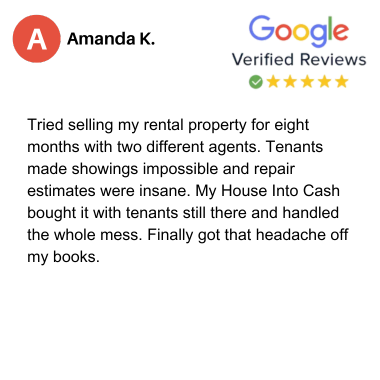
“I was unsure if I would receive a reasonable offer for my house, but the offer I received exceeded my expectations. We needed to get rid of our house quickly, and it needed some repairs. MyHouseIntoCash was very honest and made us feel secure in our decision. They explained the whole process clearly and even suggested what we would get for the house if we sold it on the open market. “
After 15 years of buying houses for cash, we’ve learned that most people just want someone to solve their house problem when home selling without creating new drama. We buy houses in every condition, every neighborhood, and every situation because that’s what actual cash home buyers do instead of choosing easy deals.