
A Direct Cash-Sale Option in St. Paul, MN
To sell your St. Paul house fast, start with a present-condition review and compare the written seller net with a feasible listing plan. MyHouseIntoCash buys directly. A “we buy houses St. Paul MN” search is useful when the offer addresses the actual condition, municipal sale requirements, ownership and your available time.
Redfin’s St. Paul housing report: narrative for the three months ending August 2026; chart cards labeled August 2026. Data captured October 2 and checked October 5, 2026. The city is described as Very Competitive, with an 82/100 Compete Score and two offers per home on average. Its roughly 21-day time-to-pending narrative is distinct from the 20-day median market-days measure.
The same report shows a 100.5% sale-to-list ratio, 44.5% of homes selling above list and 33.1% with price drops. Near-flat prices and competition can make a market-ready listing worth considering, while pricing and condition still matter. Neither a city median nor a market-days figure establishes your property's cash offer or time to proceeds.
Sell It Exactly as It Sits in St. Paul
Request a current-condition offer before committing to retail updates. St. Paul's older housing and separate municipal sale rules make it useful to distinguish optional preparation from required compliance. The city’s Truth-in-Sale of Housing guidance requires a pre-marketing evaluation for covered homes; a direct cash purchase must account for the applicable process.
Our present-condition buying policy does not replace the city's smoke-alarm requirement or registered-vacant sale approval and certification requirements. Establish those obligations early and allocate any work, fees and possession terms in writing. Our as-is selling guide helps compare a direct offer with preparing the property for listing.
Selling a House in St. Paul's Neighborhoods
Summit Hill’s historic house forms, Dayton’s Bluff’s documented frame and multi-unit stock, and the Midway Parkway–West Como subarea suggest different records to gather before choosing work. The source inventories and plan are dated. The scenarios illustrate seller choices, rather than measured neighborhood cash-sale or distress trends.
| Neighborhood / District | Housing Profile | Common Challenges We Resolve | Seller Scenario |
|---|---|---|---|
| Summit Hill | Historic Hill portions include late-19th- and early-20th-century residences, with Queen Anne/Stick, Italianate and revival examples in frame, brick and stone. This is a 1976 historic inventory, not a current condition survey. | Assess the actual exterior woodwork, masonry and complex roof. The inventory prompts maintenance review; it does not establish a neighborhood defect rate or the concealed structural system. | An owner considering substantial restoration can compare the documented scope and preparation time with a present-condition offer. |
| Dayton's Bluff | The historic inventory documents an 1882–1910 building wave, predominantly detached frame houses, plus double houses, row houses, two-flats and apartments. The 1992 nomination is not a 2026 material-share survey. | Review retained original components and actual rehabilitation records. For any registered vacant property, establish the city category and required sale review before relying on the buyer’s willingness to renovate. | An owner with an itemized rehabilitation project can seek a buyer prepared to manage work within the applicable city sale requirements. |
| Como | The 1997 Midway Parkway–West Como plan describes this subarea’s largely 1900–1930 single-family houses and some duplexes, with later multifamily development in 1960–1980. It does not describe every Como block. | The plan noted a few deferred-maintenance properties alongside generally maintained housing. Inspect the individual building and its roof, basement and permit records rather than assume current area-wide deterioration. | An individual owner weighing deferred maintenance can compare repair bids, carrying costs and a written as-is offer. |
Ice Dams, Basement Moisture and Older Water Services in St. Paul
Ice dams: follow the heat and water path
University of Minnesota Extension explains how heat escaping to a snowy roof melts snow while colder eaves refreeze runoff. An ice ridge can back water beneath the roofing and into ceilings or walls. Snow-covered pitched roofs with inadequate air sealing or insulation are a useful evaluation group; susceptibility is not limited to one construction year.
Ice ridges, winter stains, wet attic insulation and leakage during snowmelt warrant reviewing the building envelope as well as shingles. Keep repair invoices and recurrence information so the buyer can distinguish a past event from continuing entry. A new covering alone may leave the underlying heat-loss mechanism unresolved.
As a practical inference from the mechanism, findings can change repair allowances or prompt additional investigation. Minnesota’s seller-closing guidance helps frame the condition and proceeds discussion. The regional mechanism does not establish an unusually high St. Paul defect rate or automatic insurer denial.
Basement moisture: identify the cause before finishing space
Extension’s basement-moisture guidance describes rain or groundwater entering cracks or porous walls, capillary movement and poor drainage. Humid air may also condense on cold surfaces. Below-grade basements, including older houses lacking effective drainage, merit an individual review of walls, grading and gutters.
Damp walls or floors, musty air, white mineral deposits, peeling finishes, spalling masonry or deterioration in adjoining wood are useful evidence. Determine when and where the moisture appears before treating it as a cosmetic problem or assuming every symptom means structural failure.
A documented drainage and damage scope can change a retail buyer's requests or the allowance used to compare options. This is a transaction inference, not a measured local failure frequency. Keep the water-entry history and use it when weighing repairs against an as-is offer.
Lead water services: verify the pipe and program timing
Saint Paul Regional Water Services states that lead services were primarily installed in homes built before 1926 and in some built during 1927–1948. Age is a screening prompt; the actual utility inventory establishes service material. Lead may enter from service pipes, solder or brass fixtures after treated water leaves the plant.
The EPA explains that dissolved lead cannot be detected by sight, taste or smell. Confirm the service material and use appropriate testing instead of relying on clear-looking water. SPRWS provides lead-testing and replacement-program information.
As a practical budgeting step, confirm the actual replacement schedule and any completed work before negotiating a service-line allowance. No citywide percentage of homes with lead services or general insurance-denial rule is established here. A regional utility count is not a St. Paul housing percentage.
St. Paul Sale Evaluations and Registered Vacant Buildings
TISH: disclosure before marketing a covered home
Saint Paul’s Truth-in-Sale of Housing program requires evaluations before marketing single-family homes, duplexes, condominiums and townhomes, with applicable alternatives and exceptions to confirm. The report describes observed conditions; it is primarily a disclosure report rather than a general pass/fail repair certification.
The city identifies an operational hard-wired smoke detector/alarm as the required item for single-family dwellings. If missing or inoperable, the city directs the owner to a licensed electrical contractor for a permitted installation and final inspection. Confirm the property's actual requirement with DSI before agreeing the transfer.
A cash buyer's property review does not itself replace the municipal evaluation. Bring the report or applicable accepted certificate into the offer discussion and confirm who handles any required work or fee under the agreement.
Registered-vacant category can control whether a sale is ready
The city’s Vacant Buildings Program requires sale review for registered vacant buildings. Category 1 includes registration/fees, ownership notice, utilities and occupancy orders, plus a TISH report. Category 2 cannot be sold without city approval and requires a code-compliance report, licensed-contractor repair estimate, completion schedule and proof of financial capability.
Category 3 also requires city approval and cannot be sold without the specified Certificate of Code Compliance or Certificate of Occupancy. These are substantive transfer conditions. An empty house is not automatically a Category 2 or 3 property; get the actual city classification and case documents.
Confirm the approved rehabilitation or certification path before treating a proposed cash date as available. A title commitment does not replace city sale compliance, and a direct purchase does not guarantee approval. DSI's program contact is 651-266-8989.
St. Paul Housing Age, Permits, Utilities and Insurance
Use the historical housing assessment as a records prompt
The city’s March 22, 2018 draft Housing Assessment found that 57% of single-family, duplex and triplex structures were built before 1930. Four-to-19-unit buildings had a median year built of 1922, while 20-plus-unit buildings had a median year built of 1965. These are historical Ramsey property-record findings, not a current 2026 inventory.
The older stock makes actual alteration, exterior, roof, basement and water-service records useful when pricing work. Dayton's Bluff's documented frame examples and Historic Hill's brick/stone facades do not establish every house's concealed system. The city's limestone inventory includes a historic house on a concrete-block foundation; that inventory is a set of examples rather than a dominant-foundation survey.
Review permits and compliance with DSI
DSI Building Permits & Inspections / Building Plan Review handles construction records at 375 Jackson Street, Suite 220, Saint Paul, MN 55101; permit desk 651-266-8989. Its roofing-permit categories include shingle, flat, slate and tile roofs. Category names do not establish roof-material market share.
DSI Property Code Enforcement handles property-code issues. Share actual notices and permit documents with the closer, especially for an older house with alterations or a registered-vacant case. An application or sale does not automatically legalize undocumented work or remove a recorded claim.
Saint Paul’s climate dashboard identifies Xcel Energy in its building-energy context. Confirm service and possession arrangements for the actual address. Ordinary electric-account obligations are not presented here as automatic title liens.
Separate basement water history from flood-zone status
Saint Paul’s flood information addresses Mississippi River and other property-specific flooding. Use FEMA’s address search for the actual parcel and effective mapping. A wet basement does not establish that the whole neighborhood is in a flood zone.
Bring known water-entry, drainage and repair records into the inspection and offer comparison. The mapped status and the physical cause answer different questions and can affect a repair budget or a financed buyer's review differently.
Confirm the policy for condition, vacancy and renovation
Minnesota Commerce’s 2024 release describes statewide premium and wind/hail deductible pressure from severe weather, replacement costs and reinsurance. It is regional, dated context; it does not establish a 2026 St. Paul premium change. Review the actual deductible, coverage and use when estimating carrying costs.
Commerce’s underwriting guidance identifies physical condition, deficient heating or wiring, vacancy/overcrowding, extraordinary hazards and rubbish/flammable materials among conditions considered under reasonable standards. § 65A.34 provides a FAIR Plan application route after private-market cancellation, nonrenewal or rejection; it requires property inspection before condition-based denial or a condition charge.
The FAIR Association’s producer guidance requires interior/exterior inspection for foreclosure-property eligibility and accepts vacant properties in rehabilitation or listed for sale. These are program-specific conditions, not automatic coverage or rules for every private insurer. Confirm the actual policy and requirements; TISH is not a statewide four-point insurance mandate.
How to Sell Your St. Paul House Directly
Call (866) 651-6617 or use the form above. Include owners, occupancy, condition and moving plans, plus any TISH report, vacant-building classification, water-entry records, service-line information, permits and estate papers. Those records make a “cash home buyers St. Paul MN” comparison specific to your building.
For a “sell my house for cash in St. Paul” plan, check the buyer's legal identity, proof of funds, price, estimated seller net, review/cancellation rights, assignment terms and possession. St. Paul's Very Competitive report supports weighing a listing for a prepared home, while documented rehabilitation and municipal requirements may change the work and date.
Our cash-offer calculation guide explains comparable sales and condition. Ask how the actual roof, basement, water service and compliance scope enter the assumptions.
A “sell my house fast Saint Paul MN” search describes the same city and purchase review. Identify Ramsey abstract versus Torrens title, the proper signers, dated payoffs and any city sale approval. The personal-property small-estate affidavit cannot convey an inherited house. Select an available settlement date after those requirements are understood.
As-Is Repair Cost Estimator for St. Paul
Build a broad allowance for cosmetic work and selected systems. A Summit Hill historic exterior, a Dayton’s Bluff rehabilitation project and a Como house with documented basement water entry can have different scopes. Use actual inspections, St. Paul permit and vacant-building requirements and bids where available.
Illustrative U.S.-dollar planning assumptions, not measured St. Paul contractor prices.
The ranges are planning examples, not an inspection, appraisal, contractor quote, required deduction from a cash offer or guarantee. Scope, labor, permits, access, historic components and confirmed water-service work, materials and concealed damage can change costs substantially. A no-work selection still produces $0 under this model; it does not establish that the actual home needs no repairs.
Cash Sale vs. Traditional Listing in St. Paul
A traditional sale may produce a higher gross price, but commissions, seller closing costs, repairs, concessions and ongoing holding expenses reduce the amount you ultimately keep. A direct cash sale generally prioritizes speed, certainty and convenience rather than the highest possible gross price. St. Paul’s competitive resale report makes a condition-matched listing comparison useful; its TISH and registered-vacant sale requirements, repair scope and actual title can also affect preparation and timing.
| Decision point | Traditional listing | Direct cash sale with MHIC |
|---|---|---|
| Gross Price | Potentially higher gross price | Usually lower than full retail value |
| Commissions | Agent commission may apply | No agent commission |
| Closing Costs | Seller closing costs may apply | MHIC pays normal closing costs |
| Property Condition | Repairs or buyer credits may be requested | Property sold as-is |
| Contingencies | Financing and appraisal contingencies | No buyer-financing contingency |
| Timeline | Longer and less predictable timeline | Seller selects an available closing date |
When comparing cash buyers for houses in St. Paul, request proof of funds, a written price and an itemized seller net. The agreement controls normal closing-cost coverage. Mortgage payoff, taxes, liens and other seller obligations can still reduce proceeds. Read our cash buyer versus Realtor guide.
Compare Your Estimated Selling Options
Use our adjustable calculator to compare a traditional listing with a direct cash sale using your property’s estimated value and expenses.
Use the Net-Proceeds Calculator →Probate, Foreclosure Deadlines, and Complicated Title Situations in St. Paul
An inherited house needs real-estate transfer authority
Minnesota’s Collection of Personal Property by Affidavit uses a $75,000 ceiling on the entire probate estate at death, wherever located, net of liens and encumbrances, including safe-deposit contents. At least 30 days must pass after death; safe-deposit collection uses a separate 30-day inventory wait.
The affidavit is unavailable if a personal-representative appointment application or petition is pending or granted in any jurisdiction. It is made by or for an entitled successor and presented with a certified death record; specified authorized state/county agencies can use the mechanism. Superior claims must be paid. An objection or unavailable key/combination can prevent safe-deposit access.
The court’s Small Estate — No Real Estate forms make the limit clear: this affidavit cannot convey the house. The personal-property process needs no probate hearing or judge's order, but a different lawful estate/title procedure must establish real-estate sale authority. The statute has no separate Minnesota-domicile condition; that does not make the house transferable by affidavit.
Ramsey County District Court — Probate Court, Civil Division, Second Judicial District is at 15 West Kellogg Boulevard, Room 170, Saint Paul, MN 55102. Consult the court clerk or estate attorney about the actual property and required authority. Our inherited-house guide helps organize the purchasing discussion.
Identify the foreclosure route and actual notice
Chapter 580 authorizes nonjudicial foreclosure by advertisement; Chapter 581 governs judicial foreclosure by action. Minnesota has both routes. For advertisement, § 580.032 requires a recorded Notice of Pendency before first publication, no more than six months earlier, followed by the Notice of Mortgage Foreclosure Sale.
Judicial proceedings use summons and a foreclosure complaint. Civil Rule 3.01 generally commences an action through service or the specified alternatives, rather than filing alone. § 557.02 supplies the associated land-record Notice of Lis Pendens.
§ 580.03 requires six weeks' sale-notice publication and at least four weeks' service on the person in possession, if occupied. Applicable owner advice/redemption warnings and tenant notices also matter. Qualifying recorded requesters receive at least 14 days’ mailed sale notice.
Covered-home counseling information precedes the pendency notice or judicial lis pendens. Regulation X generally restricts the first legally required notice or filing for covered loans/servicers until more than 120 days delinquent, with stated exceptions and loss-mitigation protections.
These are notice components, not an exhaustive mortgage-specific timeline or a six-week clock from the first missed payment. Judicial proceedings and confirmation affect timing. No measured Ramsey default-to-sale duration is established here; give the actual notices to counsel immediately.
Separate reinstatement, a pre-sale closing and redemption
§ 580.30 permits pre-sale reinstatement by the mortgagor or authorized interested party on payment of the actual default, interest, qualifying tax/insurance advances and lawful costs/fees. It applies to either route. Ask for the written amount and deadline; reinstatement differs from post-sale redemption.
A completed off-market cash sale can be one option before the scheduled auction when the owner has legal authority and sufficient time for the required transaction. A cash offer or contract does not pause foreclosure. St. Paul's municipal requirements and actual title/payoffs must fit the remaining time.
§ 580.23 generally allows six months after an advertisement sale, with specified 12-month mortgage/equity, acreage/agricultural and reverse-mortgage exceptions. § 581.10 counts the judicial period from the confirmation order. For qualifying abandoned residential property, § 582.032 permits a court-ordered five-week period under its conditions.
A published September 21, 2026 mortgagee notice identifies the Ramsey Sheriff’s Civil Process Unit at 360 Wabasha Street North, Suite 111, Saint Paul, MN 55102 as that sale's venue. The actual published notice and any postponement govern your auction's location and time. Counsel should determine the applicable redemption rights, amount and deadline.
Review ownership, recorded claims and city sale status
Minnesota’s Home Seller’s Handbook distinguishes abstract title evidence from Torrens certificate records. Search the actual Ramsey record through RecordEASE Web Access and have the closer identify ownership, mortgages, liens and required releases. Heirship authority, municipal compliance and a recorded claim require different documentation.
The seller-closing handbook includes property taxes and assessments in the accounting of proceeds. Review dated county balances and the actual city's case documents. St. Paul’s registered-vacant sale requirements remain separate from the title commitment; payment or a willing buyer does not itself establish city approval.
Land Title Inc. documents seller closing services and lien coordination, with a nearby office at 2200 West County Road C, Suite 2205, Roseville, MN 55113, 651-638-1900. It is a verified provider example; an MHIC partnership, endorsement or independent reputation ranking is not established. Confirm the actual closer for your transaction.
MyHouseIntoCash provides direct purchasing solutions, not legal, tax, probate, foreclosure-defense or financial advice. Consult the court clerk, county tax office, real-estate or estate attorney, tax professional or another qualified professional about your circumstances. An offer does not guarantee foreclosure prevention, probate or city/court approval, lien removal, property-tax forgiveness or title clearance.
Ramsey County Property Taxes and the Seller’s Payoff
Ramsey County Property Tax, Records and Election Services (PTRES) administers county property-tax collection functions. The county’s 2026 payment bulletin gives 651-266-2222 and AskPropertyTaxandRecords@ramseycountymn.gov for account questions.
§ 279.01 gives ordinary residential installments as May 15 and October 15, 2026; tax of $100 or less is due in full May 15. Agricultural and manufactured-home schedules differ. Check your actual statement and classification rather than use the ordinary-house schedule for every property.
The following dates and installment rates reproduce Ramsey’s published 2026 penalty schedule. They are the applicable percentage on an unpaid installment, not a monthly interest rate to add or compound. Homestead and nonhomestead classification can produce different payoffs.
| Published schedule date | First half: homestead | First half: nonhomestead | Second half: homestead | Second half: nonhomestead |
|---|---|---|---|---|
| May 16, 2026 | 2% | 4% | Not overdue | Not overdue |
| June 1, 2026 | 4% | 8% | Not overdue | Not overdue |
| July 1, 2026 | 5% | 9% | Not overdue | Not overdue |
| August 1, 2026 | 6% | 10% | Not overdue | Not overdue |
| September 1, 2026 | 7% | 11% | Not overdue | Not overdue |
| October 1, 2026 | 8% | 12% | Not overdue | Not overdue |
| October 16, 2026 | 8% | 12% | 2% | 4% |
| November 1, 2026 | 8% | 12% | 4% | 8% |
| December 1, 2026 | 8% | 12% | 5% | 9% |
| January 2, 2027 — county table label | 10% | 14% | 7% | 11% |
January 2, 2027 is the county PDF's column label; confirm the actual account, holiday processing and dated balance with PTRES. The schedule separately states that interest and statutory fees/charges apply from January 1 of the following year. § 279.03 governs delinquent-tax interest; late-installment penalties already apply during 2026.
Minnesota Revenue publishes 7% annual delinquent-property-tax interest for calendar 2026, principally relevant to older taxes already delinquent. Counties may adopt a lower rate; a Ramsey reduction is not established here. Do not automatically use 7% for unpaid 2026 taxes in 2027. The statutory framework has a 14% ceiling and counts a fraction of a month as a full month for delinquent interest.
Obtain the actual tax, penalty, interest and assessment balance for the intended closing date. Normal closing-cost coverage does not forgive existing county charges, mortgages or other seller obligations. Use those figures in the itemized seller net before comparing options.
What Happens Between Accepting Your Cash Offer and Getting Paid in St. Paul?
The day labels below illustrate a transaction already ready for the required steps. They are not a guaranteed five-day payout. St. Paul TISH or registered-vacant approval, estate authority, Ramsey title exceptions and settlement conditions can require more time. Establish the municipal status and ownership before committing to a move date.
Confirm the buyer, price, review/cancellation terms, possession and written cost allocation. MHIC charges no service fee or agent commission and pays normal closing costs under the agreement. Tax, mortgage and other seller obligations still affect proceeds; agree who handles any applicable evaluation, sale-review fee and required compliance work.
Minnesota’s title guidance distinguishes the abstract/recorded chain from the Torrens certificate. Order the appropriate evidence required by the agreement and review Ramsey records. Land Title Inc.’s seller workflow documents lien coordination and closing-document preparation; confirm the selected closer's actual scope.
Provide the legal description, title papers and estate/spousal authority records. Separately establish the TISH or accepted-report status and registered-vacant category with DSI. A Category 2 approval path needs rehabilitation documentation; a Category 3 transfer needs the specified certification and approval. No universal HOA estoppel or ordinary electric-bill title lien is assumed.
Use dated Ramsey tax figures and actual mortgage/lienholder balances. The title examination identifies the releases and documents needed for this conveyance; the closer coordinates applicable clearance and seller accounting. Estate or municipal conditions may need an attorney, court or city action and can extend the schedule.
The buyer's willingness to take on repairs does not resolve a title exception or replace city sale approval. Confirm which requirements are complete and which remain before booking signing or possession.
§ 507.07 supplies statutory warranty and quitclaim forms with different title assurances. The agreement and actual seller capacity determine the deed, including any appropriate estate or fiduciary conveyance; no countywide predominant deed form is assumed.
§ 507.24 requires execution and certified acknowledgment, ordinarily with original grantor and notarial signatures unless a lawful electronic or other exception applies. Its ordinary recordability rule does not require two separate attesting witnesses. § 507.02 generally requires both spouses to sign a married owner's homestead conveyance, subject to exceptions and authorized powers of attorney.
The Secretary of State’s ordinary notary guidance recommends a journal rather than generally requiring one. Confirm specialized representative or remote execution with the closer. Ramsey’s recording authority routes abstract property to the Recorder and Torrens property to the Registrar of Titles.
Burnet Title’s seller preparation guidance documents wire transfer as a seller-proceeds option, with the closing team confirming disbursement after funding. The actual provider and transaction control method, conditions and timing. Signing alone does not establish immediately available funds.
Minnesota’s seller-closing handbook describes closers/title services and the option of a real-estate attorney; it does not establish universal attorney attendance. The buyer-closing handbook distinguishes a lender's policy from the buyer's owner policy. Burnet Title offers in-person and remote signing options; confirm availability for the selected transaction.
St. Paul and Nearby Communities Within 75 Miles
Our Minnesota service page includes St. Paul. Nearby homes can be reviewed in these communities; share the actual address, ownership, condition and occupancy to establish the property's purchase and closing requirements.
Metropolitan Council’s municipal system statements identify the regional planning context. A straight-line check of St. Paul’s representative GeoNames point against 2025 Census Minnesota city points places these representative nearby points approximately 3–13 miles away, all within 75 miles. This is not road distance, a surveyed service boundary or a guarantee of purchase eligibility.
Saint Paul mailing names extend beyond the city. Nearby properties can be in Ramsey, Dakota or Washington County and follow their own municipal sale rules. Verify the actual parcel; St. Paul DSI requirements do not automatically govern every nearby home.
A Present-Condition Sale Starts with the Actual House
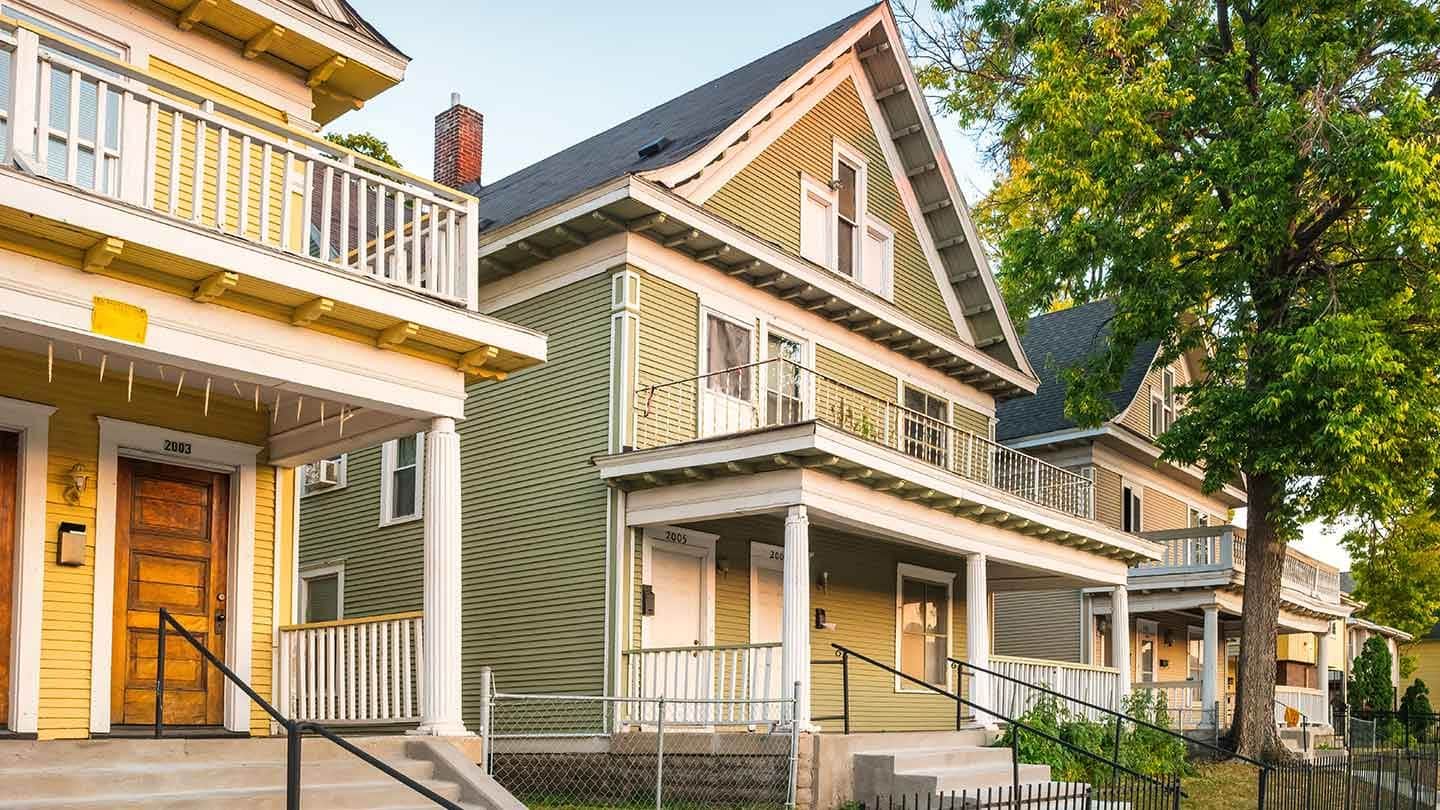
The city's historical housing findings make original components, roof and basement records useful, while SPRWS's older-service pattern makes the actual pipe inventory worth checking. Include those records and any TISH or registered-vacant documents when comparing a repair-and-list plan with a written as-is offer.
St. Paul Real Estate & Legal Terms Homeowners Should Know
Truth-in-Sale of Housing (TISH): Saint Paul's pre-marketing condition-disclosure evaluation for covered homes. It is not a general pass/fail inspection; applicable smoke-alarm requirements still affect a sale. Confirm the applicable report, accepted alternative or exception before marketing or agreeing the transfer.
City of Saint Paul, Department of Safety and Inspections — Truth-in-Sale of Housing
Abstract property: Minnesota land whose title is examined through the recorded chain of instruments. Sellers commonly supply an abstract or an allowed title-insurance commitment to support title review. Check the evidence called for in your sale agreement before ordering the title update.
Minnesota Attorney General — Home Sellers Handbook, Accepting an Offer / Title Matters
Torrens / registered property: Land tracked by a registrar's certificate of title. The seller's certificate number identifies the registered title record; title and transfer requirements follow that system. Give the certificate number and legal description to the closer early so the correct registered-land route is used.
Minnesota Attorney General — Home Sellers Handbook, Accepting an Offer / Title Matters
Notice of Pendency of Mortgage Foreclosure by Advertisement: The recorded land-record notice preceding nonjudicial foreclosure publication. It alerts the title review to an active proceeding and must precede the first published sale notice. Give the notice and sale papers to counsel and the closer; the recorded notice alone does not establish that an auction occurred.
Mortgagor redemption period: The borrower's statutory opportunity after an advertisement sale to recover the property by paying the required redemption amount, usually within six months; specified exceptions change the deadline. Ask counsel to determine the actual period and amount for the property before making post-sale plans.
Category 2 registered vacant building: A Saint Paul vacant-building classification requiring city approval before sale, a code-compliance inspection and rehabilitation documentation. A cash purchase does not automatically remove those requirements. Get the current category and sale-review requirements from DSI before treating a proposed closing date as available.
City of Saint Paul, Department of Safety and Inspections — Vacant Building Program
St. Paul Home-Selling FAQs
Which residential delivery ZIPs cover St. Paul and the nearby communities on this page?
The combined standard-delivery coverage list is 55016, 55033, 55055, 55071, 55075, 55076, 55077, 55101, 55102, 55103, 55104, 55105, 55106, 55107, 55108, 55109, 55110, 55112, 55113, 55114, 55115, 55116, 55117, 55118, 55119, 55120, 55121, 55122, 55123, 55125, 55126, 55127, 55128, 55129, 55130, 55337. It combines St. Paul’s main city ZIPs with full or partial delivery overlaps for every nearby municipality named here. PO Box and unique codes are excluded. ZIP boundaries and mailing names do not determine municipal boundaries or residential use. Use USPS street-address lookup and the parcel record to confirm your property; this is not a list of every postal area in an entire 75-mile circle.
Which ZIP codes serve homes in the City of St. Paul?
St. Paul: 55101, 55102, 55103, 55104, 55105, 55106, 55107, 55108, 55114, 55116, 55117, 55119, 55130. These are the main ZIP areas labeled on the city’s own ZIP map. Shared boundary-area addresses can also use 55109, 55113 or 55118; those codes are listed with the adjoining municipalities below. A broad “Saint Paul” mailing-city list includes numerous suburbs outside St. Paul. Verify the street and parcel before selecting the city permit, evaluation or tax office.
Which residential delivery ZIPs cover Roseville and Maplewood?
Roseville: 55112, 55113; Maplewood: 55106, 55109, 55110, 55117, 55119. These codes commonly use Saint Paul mailing names. Standard delivery territory can extend across municipal limits; a mailing name alone does not establish that St. Paul DSI governs the home.
Which residential delivery ZIPs cover Woodbury and Oakdale?
Woodbury: 55055, 55125, 55129; Oakdale: 55128. Woodbury’s mapped delivery overlap includes Newport 55055 and Saint Paul mailing territory. Check the actual street and Washington County parcel record. Postal names do not add separate municipalities to the service list or make every address in a shared code part of Woodbury.
Which residential delivery ZIPs cover North St. Paul and Little Canada?
North St. Paul: 55109; Little Canada: 55109, 55113, 55117, 55127. These delivery areas cross local boundaries and generally use Saint Paul postal names. Establish the actual municipality and parcel, especially before applying a city evaluation or permit requirement.
Which residential delivery ZIPs cover Shoreview, White Bear Lake and Vadnais Heights?
Shoreview: 55126; White Bear Lake: 55110, 55115, 55127; Vadnais Heights: 55110, 55127. A delivery ZIP may overlap neighboring cities or townships. The mailing name and ZIP are useful for locating a street, while the parcel establishes the actual municipal and county authority.
Which residential delivery ZIPs cover West St. Paul and South St. Paul?
West St. Paul: 55118; South St. Paul: 55075. These are separate cities in Dakota County, rather than neighborhoods within St. Paul. Verify the actual parcel and applicable city rules even when the postal address says Saint Paul.
Which residential delivery ZIPs cover Inver Grove Heights, Eagan and Mendota Heights?
Inver Grove Heights: 55075, 55076, 55077, 55118; Eagan: 55077, 55121, 55122, 55123, 55337; Mendota Heights: 55118, 55120. Inver Grove Heights includes South Saint Paul postal overlap, while Eagan’s mapped delivery area includes Inver Grove Heights and Burnsville postal overlap. Those mailing names do not place every address in one city. Confirm the actual street and Dakota County parcel.
Which residential delivery ZIPs cover Cottage Grove?
Cottage Grove: 55016, 55033, 55071, 55129. The city-overlap map includes Hastings, Saint Paul Park and Saint Paul postal territory. Shared ZIPs describe delivery overlap rather than city limits. Use the actual street and Washington County parcel to determine jurisdiction and purchase requirements.
Does the nearby-community list use driving distance?
No. The listed representative city points are approximately 3–13 straight-line miles from St. Paul’s GeoNames reference point, checked against 2025 Census city points. All are within 75 miles. Road routes, city limits and postal areas differ. Share the actual address for review; the Google map is a regional location aid.
Can I sell my house as is in St. Paul without retail updates?
You can request a current-condition offer before painting, replacing flooring, fixing the roof, staging or arranging repeated showings. Agree cleanout and possession in writing. St. Paul’s applicable TISH evaluation, required single-family smoke alarm and registered-vacant sale approvals still need to be addressed. The buyer’s willingness to renovate does not itself satisfy those transfer requirements.
What should I check in a “sell house fast St. Paul MN” cash offer?
Check the buyer’s legal identity, proof of funds, written price, itemized seller net, review/cancellation rights, assignment terms and possession. Compare with a feasible listing plan for the actual house. Confirm TISH or vacant-building status, Ramsey abstract/Torrens evidence, estate or spouse signing authority, dated payoffs and settlement conditions before treating a proposed closing date as certain.
How should I compare cash buyers for houses in St. Paul?
Compare written seller proceeds, property-review terms, required city compliance and feasible timing. A market-ready house may justify a traditional listing in St. Paul’s competitive market. A direct buyer may offer a lower price in exchange for taking on work and limiting marketing or financing uncertainty. The city median does not establish a universal cash-offer percentage. Review actual assumptions and proof of funds.
Does St. Paul’s $314,792 median determine my cash offer?
No. That figure describes closed sales across all home types in the city report, whose narrative covers three months ending August 2026 and whose chart cards are labeled August 2026. The reported year-over-year change is −0.066%, not −6.6%. It is not a cash-only average, appraisal or offer schedule. Use condition-matched sales and your property’s actual requirements.
Does a 20-day market figure mean I receive cash in 20 days?
No. The report’s 20-day median days on market is a retail marketing measure. Its roughly 21-day pending narrative is a different measure. An 82/100 Compete Score, two offers per home on average and a 100.5% sale-to-list ratio do not eliminate municipal approval, title, payoff or settlement requirements. Acceptance-to-proceeds timing depends on the actual transaction.
What is St. Paul’s Truth-in-Sale of Housing evaluation?
TISH is a pre-marketing evaluation for covered single-family homes, duplexes, condominiums and townhomes, with accepted alternatives and exceptions to confirm. It primarily discloses observed conditions rather than certifying that every item passes or requiring every observed defect to be repaired. Obtain the applicable report before marketing and give it to the buyer and closer.
Does an as-is cash sale avoid St. Paul’s smoke-alarm requirement?
No blanket cash-sale exemption is established. The city identifies an operational hard-wired smoke detector/alarm as the required item for a single-family dwelling. If missing or inoperable, its guidance directs permitted installation by a licensed electrical contractor and final inspection. Confirm the requirement and any accepted alternative or exception with DSI. Agree responsibility and cost in writing.
Can a buyer simply purchase a Category 2 registered vacant building?
City approval is required before sale. The city’s Category 2 process calls for a code-compliance report, licensed-contractor repair estimate, completion schedule and proof of financial capability. A purchase agreement or proof of funds alone does not establish approval. Obtain the current case documents and approved rehabilitation path before committing to a move or closing date.
What changes for Category 1 and Category 3 registered vacant buildings?
Category 1 sale review includes registration and fees, ownership notice, utilities, occupancy orders and a TISH report. Category 3 cannot be sold without city approval and the specified Certificate of Code Compliance or Certificate of Occupancy. An empty house is not automatically in either category. Ask DSI for the actual classification and requirements; a title commitment does not replace the city’s review.
Why can an ice-dam problem involve more than roof shingles?
Heat escaping to a snowy roof can melt snow while colder eaves refreeze runoff. The resulting ridge can back water beneath the roof covering and into ceilings or walls. Winter stains, ice ridges or wet attic insulation justify reviewing air sealing, insulation and the water path as well as the roof. This regional mechanism does not diagnose every St. Paul house.
Does basement dampness mean my St. Paul house is in a flood zone?
No. Below-grade water can involve cracks, porous walls, capillary movement, surface drainage or condensation. Review the actual history, grading, gutters and foundation separately from FEMA’s effective parcel mapping. Mississippi River proximity alone does not establish the flood designation or explain every wet-basement symptom.
Which St. Paul homes may have a lead water service?
SPRWS says lead services were primarily installed in homes built before 1926 and in some homes built during 1927–1948. Age is a screening prompt; verify the actual service material with the utility inventory. Lead can enter from pipes, solder or fixtures after treated water leaves the plant. Dissolved lead cannot be detected by sight, taste or smell, so use appropriate testing.
Should I budget for service-line replacement before selling?
First verify the actual service material, completed work and SPRWS program information. Confirm replacement timing and any property-specific obligations before including an allowance in a repair-and-list comparison or cash-offer discussion. A clear-looking water sample or a broad housing-age category does not establish that the service is lead-free or that replacement is already complete.
Who reviews St. Paul permits and undocumented renovations?
DSI Building Permits & Inspections / Building Plan Review handles construction records at 375 Jackson Street, Suite 220, Saint Paul, MN 55101; the permit desk is 651-266-8989. DSI Property Code Enforcement handles property-code issues. Share actual records and notices. A sale, permit application or buyer’s willingness to do work does not automatically approve an undocumented alteration or clear a recorded claim.
What does St. Paul’s older housing assessment tell me?
The March 22, 2018 draft assessment found that 57% of single-family, duplex and triplex structures were built before 1930. Four-to-19-unit buildings had a median build year of 1922, and 20-plus-unit buildings had a median build year of 1965. These are historical findings rather than a 2026 inventory or condition diagnosis. Gather actual alteration, roof, basement and water-service records.
Do the neighborhood profiles prove current defects or repair costs?
No. The Historic Hill inventory, Dayton’s Bluff nomination and Midway Parkway–West Como plan document dated housing forms and development patterns. The Como plan concerns a particular subarea. These sources help identify records to review; the maintenance issues and seller scenarios are practical examples, not current neighborhood defect rates or contractor quotes.
Is an old roof or vacant house automatically uninsurable?
Use the carrier’s actual policy, notice and property requirements. Minnesota Commerce identifies physical condition, deficient heating or wiring, vacancy and other hazards among underwriting considerations. The FAIR Plan offers an application route for eligible owners rejected by private insurers, with inspection requirements. Its producer guidance accepts vacant homes in rehabilitation or listed for sale and requires interior/exterior inspection for foreclosure-property eligibility. Approval is not automatic.
Can the small-estate affidavit transfer an inherited St. Paul house?
No. Section 524.3-1201 is a personal-property collection procedure rather than a deed or house-transfer process. Its limit is $75,000 on the entire probate estate wherever located at death, net of liens and encumbrances, with a minimum 30-day death wait. A pending or granted personal-representative appointment in any jurisdiction prevents this affidavit route. Obtain the appropriate real-estate succession or probate/title authority for the house.
Who can use the personal-property affidavit, and is a court order required?
An entitled successor, or someone acting on the successor’s behalf, generally presents the affidavit and certified death record to the property holder without a judge’s distribution order. Specified medical-assistance agencies also have statutory authority, and superior claims retain priority. Safe-deposit contents have a separate 30-day inventory wait and access requirements. This procedure cannot itself convey real estate.
Which court handles a Ramsey County probate matter?
Ramsey County District Court — Probate Court, Civil Division, Second Judicial District is at 15 West Kellogg Boulevard, Room 170, Saint Paul, MN 55102. Confirm the actual venue and documents with the court or estate attorney. The personal-property affidavit’s threshold does not establish authority to sign a deed for an inherited house.
How does a Minnesota mortgage foreclosure begin?
Minnesota permits foreclosure by advertisement under chapter 580 and court action under chapter 581. Advertisement requires a recorded Notice of Pendency before the first publication, no more than six months earlier. Judicial foreclosure involves summons and complaint, with commencement under Rule 3.01 generally by service or specified alternatives, and recorded lis pendens. Filing a complaint alone is not the general commencement rule. Identify the actual route before calculating deadlines.
Are six weeks of sale-notice publication the entire foreclosure timeline?
No. Advertisement requires six weeks of publication and at least four weeks of occupant service if occupied; those periods can overlap. Applicable counseling, owner, tenant and requested-interest-holder notices also matter. Covered Regulation X loans and servicers generally face a more-than-120-days delinquency restriction on the first required notice or filing, with specified exceptions. No universal default-to-auction duration follows from these separate requirements.
Can I reinstate a mortgage before a Ramsey foreclosure sale?
Section 580.30 permits eligible reinstatement before the sale by paying the actual default, interest and lawful foreclosure costs in either route. Request the written amount and deadline promptly. Reinstatement differs from post-sale redemption. A purchase offer or contract does not itself pause the auction or guarantee that a cash sale can close in time.
What redemption period follows a Minnesota mortgage foreclosure?
Advertisement generally provides six months after sale, with specified 12-month exceptions, including qualifying equity, acreage, agricultural and reverse-mortgage cases. Judicial foreclosure counts the applicable period from the order confirming sale. A qualifying abandonment procedure under § 582.032 can shorten redemption to five weeks. Ask counsel to determine the actual route, period, certificate and amount for the property.
Where does a Ramsey County mortgage foreclosure auction take place?
A documented 2026 sale notice identifies the Ramsey County Sheriff Civil Process Unit at 360 Wabasha Street North, Suite 111, Saint Paul, MN 55102. That is evidence for that published sale, rather than a guarantee about every auction. Check your actual notice, time and postponements immediately with counsel and the sheriff. A direct-sale proposal does not suspend the process.
When are ordinary Ramsey residential property taxes due in 2026?
For ordinary residential annual tax above $100, installments are due May 15 and October 15, 2026. Tax of $100 or less is due in full May 15. Agricultural and manufactured-home schedules differ. Use the actual statement and classification, then obtain the dated balance for the intended closing.
How do Ramsey’s 2026 homestead and nonhomestead penalties differ?
The published schedule gives unpaid-first-half homestead/nonhomestead rates of 2%/4% from May 16, 4%/8% from June 1, 5%/9% from July 1, 6%/10% from August 1, 7%/11% from September 1 and 8%/12% from October 1 through December. Unpaid-second-half rates are 2%/4% from October 16, 4%/8% from November 1 and 5%/9% from December 1. These are applicable installment penalties, not monthly interest to compound. Confirm the account and processing with PTRES.
Can I use 7% for every Ramsey delinquent-tax payoff?
No. Minnesota Revenue publishes 7% annual delinquent-property-tax interest for calendar 2026; it is not automatically the rate for unpaid 2026 taxes in 2027. The county’s January 2, 2027 column labels first-half penalties of 10%/14% and second-half 7%/11% for homestead/nonhomestead. The PDF separately notes following-year interest and statutory charges. Confirm the actual holiday processing, tax years, penalties, interest and dated balance with PTRES.
What is the difference between abstract and Torrens title?
Abstract property uses the recorded chain of title; the agreement determines whether an abstract or title-insurance commitment is supplied. Torrens registered land has a certificate of title. Ramsey RecordEASE supplies public land records. The Recorder handles abstract recording and the Registrar of Titles handles registered land. Give the legal description and existing title papers to the closer early.
Which title service will handle my St. Paul cash sale?
Confirm the selected provider for your transaction. Land Title Inc. documents seller lien coordination and closing-document preparation, with a local office at 2200 West County Road C, Suite 2205, Roseville, MN 55113; phone 651-638-1900. It is a local example rather than a claimed MHIC partnership or ranking. Ask the selected closer to confirm municipal status, title evidence, actual payoffs and disbursement conditions.
Who signs the deed, and what does recording require?
The agreement, title and seller capacity determine the actual deed. Section 507.24 requires execution and certified acknowledgment, ordinarily with original signatures unless a lawful exception applies; ordinary acknowledged deeds do not require two separate attesting witnesses. Section 507.02 generally requires both spouses to sign a married owner’s homestead conveyance, subject to exceptions. Confirm estate, representative or remote-signing documents with the closer.
Does the five-day example guarantee immediate seller proceeds?
No. It illustrates a transaction ready for the required steps. TISH, registered-vacant approval, estate authority, Ramsey title exceptions, payoffs and settlement conditions can extend the schedule. Burnet Title documents wire as a seller-proceeds option. The actual closer determines available methods and confirms release after funding and applicable conditions. Signing alone does not establish immediately available money.
Does MHIC’s normal closing-cost coverage erase existing seller debts?
No. The written agreement controls normal closing-cost coverage, and MHIC charges no service fee or agent commission. Existing mortgage payoffs, Ramsey tax charges, assessments, recorded liens and other seller obligations can reduce proceeds. Agree who handles applicable evaluations, sale-review fees and compliance work. Compare an itemized seller net using actual balances.
Is the St. Paul repair estimator a contractor quote or required offer deduction?
No. It uses illustrative area-based planning ranges and optional work with a disclosed 15% contingency. It is not an inspection, appraisal, contractor bid, guaranteed cost or mandatory cash-offer deduction. Permits, actual drainage or insulation scope, service material, labor, access and concealed damage can change costs. Selecting no work produces zero under the model rather than proving that no repairs are needed.
Request a Written As-Is Cash Offer in St. Paul
Compare your house’s present condition with your next move.
For a “sell my house as is in St. Paul” plan, share the owners, occupancy, condition and moving schedule, along with available roof, water-entry, service-line, permit, TISH, vacant-building and estate records. We buy houses for cash and explain written terms so you can compare an offer with a feasible listing or repair plan.
Request My Cash Offer → Call (866) 651-6617Official St. Paul Homeowner Resources
Use the actual parcel, case and intended closing date when confirming court, permit, municipal evaluation, tax and recording instructions. Our Minnesota cash-homebuyer service page explains broader coverage.
Residential delivery ZIP coverage references
Start with Saint Paul’s Maps and Records and the city ZIP map. Nearby standard-delivery municipal overlap references: Roseville; Maplewood; Woodbury; Oakdale; North St. Paul; Little Canada; Shoreview; White Bear Lake; Vadnais Heights; West St. Paul; South St. Paul; Inver Grove Heights; Eagan; Mendota Heights; Cottage Grove. These maps distinguish standard delivery from PO Box and unique codes. Use USPS ZIP Lookup for the actual street and the parcel record for municipal authority. Saint Paul mailing-city lists cover suburbs as well as the city itself; a postal classification alone does not establish residential use or purchase eligibility.