
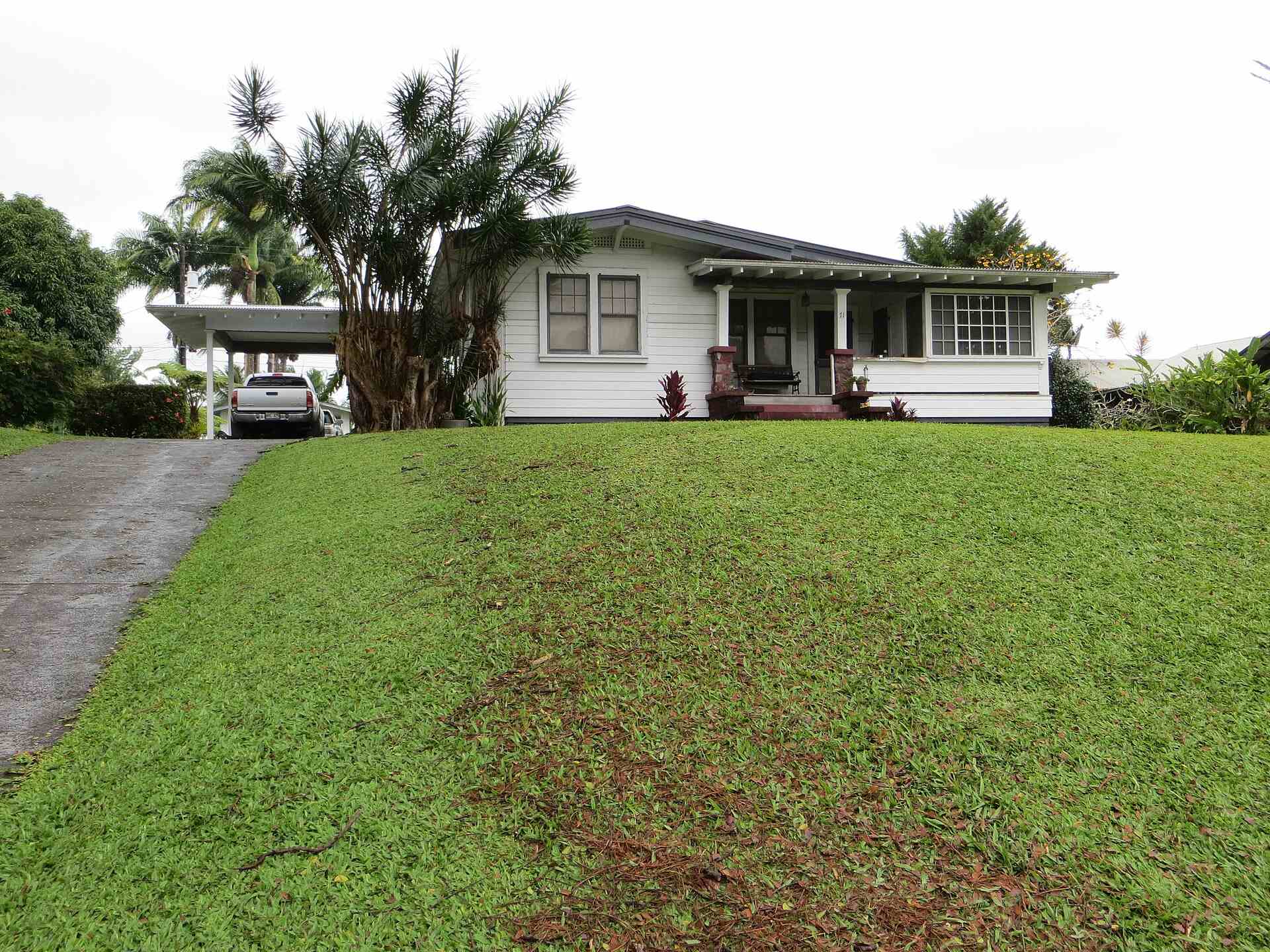
Sell My House Fast in Hilo, HI — We Buy Houses for Cash
Need to “sell my house fast in Hilo HI”? Share your address and condition today. We buy houses in Hilo as-is, explain a written cash offer, and coordinate an available escrow closing if you accept—without repairs or agent commissions.
A straightforward offer for the house you have today.
Get Your No-Obligation Cash Offer
Tell us about your Hilo property and the timing that works for you.
The 5–10 minute offer goal depends on reaching you and receiving sufficient property information. It is not a closing-time guarantee.
Hilo Market Watch
Compare the Market With Your Property’s Actual Condition
For the three months ending September 2026, Redfin’s Hilo city report described the market as “Not Very Competitive,” with a Compete Score of 13/100. Its September dashboard also reported 40.2% of homes with price drops and a 96.2% sale-to-list ratio.
These retail-market figures are a dated comparison point, not a valuation of your home. Days on market measure marketing exposure, not the full time to receive sale proceeds. Compare a written cash offer with the repair budget, likely negotiating room and holding expenses of listing.
Your current-condition option
Sell It Exactly as It Sits in Hilo
Our direct-purchase policy lets you request an offer before spending money on preparation. For a Hilo-area home with uncertain wastewater records, that can mean comparing an offer before commissioning an upgrade. The Hawaiʻi Department of Health warns that cesspools are sometimes incorrectly described as septic or sewer-connected; tell us what you know, and let the records establish the actual system.
Put the agreed condition, items remaining, review terms and closing costs in the purchase contract. Our as-is selling guide explains the broader selling option.
The address changes the advice
Selling a House in Hilo’s Neighborhoods
Historical plans and surveys describe housing and documented issues; they do not diagnose your house. The seller scenarios below are practical examples, not measured patterns of why residents sell.
| Neighborhood / District | Housing Profile | Common Challenges We Resolve | Seller Scenario |
|---|---|---|---|
| Kaʻūmana / Kaumana Lani | Established detached houses and newer subdivision construction around Hokulani, Haleloke and Punahoa Mauka; the 2015 park assessment describes a subdivision completed in 2013. | Assessing a home before drainage work. Neighbors reported heavy-rain sheet flow even though the assessed park site was mapped Zone X; that finding does not apply to every house. | An owner compares drainage bids with an offer in current condition. |
| Waiākea-Uka | Established subdivisions and house lots identified in historical County planning. A 1964 University Heights infrastructure appropriation does not date an individual house. | Reviewing documented water history and existing repairs. The 2000 flood response records Kawailani-area damage; current parcel mapping still matters. | A seller supplies prior water-entry reports rather than assuming the entire neighborhood has one flood designation. |
| Keaukaha | Early homestead-era and mid-century houses, later additions and replacements. A DHHL survey documents single-wall/redwood houses and sheet-metal roofs. | Distinguishing fee-simple property from DHHL leaseholds, while reviewing location-specific coastal exposure and wastewater records. | A fee-simple owner considers an as-is sale. A DHHL lease requires an eligible transferee and Hawaiian Homes Commission approval; an unrestricted cash purchase cannot be assumed. |
What can change a repair allowance
Hilo Property Conditions Worth Understanding Before You Sell
Termites can weaken hidden timber
UH CTAHR documents Formosan subterranean termites in Hilo. They consume cellulose within wood, potentially weakening joists, roof members and framing while leaving limited surface evidence.
In wood houses of any age, hollow-sounding beams, sagging floors or doors, warped walls, discarded wings or mud tunnels warrant investigation. A treatment quote alone may not describe structural repairs. Compare the combined scope with an as-is offer; no citywide infestation rate or automatic transaction failure is assumed.
Water damage needs a cause, not just new paint
The documented Kawailani flooding is evidence for specific locations. Ground-level rooms, low crawlspaces and enclosed lower areas can retain water where runoff enters.
Staining, damp finishes, peeling paint, visible mold and musty odors justify checking the source. EPA guidance emphasizes moisture control and drying. Review remediation and current parcel flood mapping before budgeting; a tsunami evacuation designation is a different map.
Older wind connections may need review
UH Sea Grant’s retrofit guidance identifies roof-to-wall and continuous-load-path concerns in relevant Hawaiʻi County light-wood houses built before requirements generally applying after 1994.
Inadequate connections can allow wind uplift to separate the roof from the walls. Missing or deteriorated visible connectors call for qualified assessment; hidden connections cannot be judged by a glance. A retrofit estimate can inform the sale discussion, without assuming every older Hilo house needs the same work.
These are sourced inspection priorities, not a ranking of Hilo’s most common defects. As a practical inference, documented repair scope can affect buyer credits, renegotiation, willingness to proceed, insurer review or mortgage approval. Outcomes depend on the property and transaction.
Raised houses and historical construction
The 2005 County General Plan records a South Hilo construction peak in the 1970s followed by substantial 1980s building. This district history is not a current Hilo age census.
Sea Grant’s regional guidance discusses older single-wall, post-and-pier houses on concrete “tofu blocks.” For an applicable house, have post/pier connections and lateral support assessed rather than pricing repairs from age alone.
Insurance review is program-specific
The September 2023 HPIA Homeowners ’91 guidelines require supplemental electrical, plumbing and roof information for risks more than 30 years old. They list vacant or unoccupied dwellings, unpermitted structures/additions and inadequate fire-apparatus access as ineligible conditions.
These are that program’s published rules, not universal Hilo insurance standards. Obtain a property-specific insurance answer before treating a retail offer as certain; age alone is not stated as automatic denial.
Check permits, wastewater and the actual hazard map
For building permits and inspections, contact the County Building Division at Aupuni Center, 101 Pauahi Street, Suite 7, Hilo, HI 96720, or (808) 961-8331. Zoning, land-use and SMA questions go to the Planning Department. Compare additions with records before assuming they are approved.
DOH’s wastewater guidance distinguishes sewer, septic/IWS and cesspools. Cesspools release untreated wastewater and generally must be upgraded or connected to sewer before January 1, 2050, with earlier triggers in specified circumstances. Verify the system and applicable requirement before paying for work.
For coastal property, the Keaukaha plan identifies location-specific tsunami exposure. Inland and coastal parcels also need their own risk review: USGS describes Mauna Loa northeast-rift flows capable of moving toward Hilo, but that does not assign your house a lava zone or transfer lower-Puna conditions to Hilo. Keep the address and TMK at the center of each inquiry.
Adjustable planning assumptions
AS-IS Repair Cost Estimator
Compare a broad repair budget with an offer for your house today. The starting rates below are hypothetical U.S.-dollar planning inputs, not measured Hilo contractor prices. Replace them with your own estimates. Actual costs vary with scope, materials, labor, permitting, access and concealed damage.
Interior: $15,000–$37,500; additional work: $0–$0; 15% contingency: $2,250–$5,625.
This is not an inspection, appraisal, contractor quote, MHIC offer or guarantee. Permit fees, specialist work and other omitted scopes are excluded unless you enter them. The estimate is not an automatic deduction from a cash offer. JavaScript enables recalculation.
Compare the money and the terms
Cash Sale vs. Traditional Listing in Hilo
A traditional sale may produce a higher gross price, but commissions, seller closing costs, repairs, concessions and ongoing holding expenses reduce the amount you ultimately keep. A direct cash sale generally prioritizes speed, certainty and convenience rather than the highest possible gross price.
Hilo’s reported 92 median days on market is one reason to price your own holding period carefully. It is a historical retail benchmark, not a forecast for your house or a cash closing.
| Decision Point | Traditional Listing | Direct Cash Sale With MHIC |
|---|---|---|
| Gross Price | Potentially higher gross price | Usually lower than full retail value |
| Commissions | Agent commission may apply | No agent commission |
| Closing Costs | Seller closing costs may apply | MHIC pays normal closing costs |
| Property Condition | Repairs or buyer credits may be requested | Property sold as-is |
| Contingencies | Financing and appraisal contingencies | No buyer-financing contingency |
| Timeline | Longer and less predictable timeline | Seller selects an available closing date |
Individual listing offers vary. For either route, review inspection, title and cancellation terms. Mortgage payoffs, back taxes, other seller obligations and applicable tax withholding still affect your proceeds; confirm cost allocation in writing.
Compare Your Estimated Selling Options
Use our adjustable calculator to compare a traditional listing with a direct cash sale using your property’s estimated value and expenses.
Use the Net-Proceeds Calculator →Authority and deadlines come first
Probate, Foreclosure Deadlines, and Complicated Title Situations in Hilo
An inherited house needs real-estate authority
The HRS §560:3-1201 affidavit collects qualifying personal property, not houses or land. It uses a $100,000 gross Hawaiʻi-estate limit without a stated debt deduction; registered motor vehicles have a separate value exception. A death certificate and qualifying affidavit are required, no fixed post-death waiting period is stated, and ordinarily no Hawaiʻi personal-representative application may be pending or appointment granted. It specifies entitlement and relationship rather than a separate domicile condition. Specified DHS claims have priority; debts are not forgiven.
This affidavit ordinarily goes to the personal-property holder without a court order; disputes may require proceedings under Probate Rule 91. It does not give an heir authority to sign a deed.
Which other small-estate procedures might apply?
HRS §560:3-1205 permits clerk administration when property left in Hawaiʻi totals no more than $100,000 and no personal representative has been appointed in the State. The clerk or an interested person files a verified petition in the circuit where the decedent resided, was domiciled or left property. A court order is required; it may issue without notice or hearing. The section states no fixed post-death wait and does not expressly exclude real estate, but local acceptance and title documentation must be confirmed. Eligibility is not automatic sale authority.
HRS §560:3-1203 summary administration instead concerns an existing personal representative. It has no single $100,000 cap: the estate after liens and encumbrances must fit the listed allowances and administration, funeral and final-illness expenses. Once conditions are established, distribution may proceed immediately without creditor notice, followed by the statutory closing statement. Real-estate transfer requirements still apply.
Contact the Circuit Court of the Third Circuit, State of Hawaiʻi — Hilo; Estate and Guardianship office at Hale Kaulike, 777 Kīlauea Avenue, Hilo, HI 96720-4212. Ask the clerk about procedure and an attorney about authority to sell. Our inherited-house guide can help organize the selling discussion.
A cash offer does not pause a foreclosure
Hawaiʻi authorizes judicial and nonjudicial mortgage foreclosure. An off-market sale is one possible option when the owner has legal authority, the required payoffs can be completed and enough time remains before the scheduled sale. Give your attorney and escrow provider the actual notices immediately.
Judicial foreclosure
A Circuit Court complaint is followed by service of summons and complaint. Under HRCP Rules 4 and 12, the ordinary answer deadline is 20 days after service, subject to exceptions and court orders. That is a response deadline, not a default-to-sale period.
A recorded Notice of Pendency of Action affects title notice. Judicial cure/redemption may remain available before entry of the written sale-confirmation order, as discussed in Santiago v. Tanaka. Have counsel assess the specific stage.
Part II nonjudicial foreclosure
The Notice of Default and Intention to Foreclose states the default and required cure, allows at least 60 days after its date, and must be served on statutory recipients. It is recorded before its cure deadline.
Under §667-28(d), cure is available no later than three business days before the sale, unless otherwise agreed, by paying the unaccelerated amount due plus applicable fees and costs. Timely cure cancels the sale; the section provides no cure or redemption right after that deadline.
Publication, owner-occupant rights and federal timing
Judicial sale publication: §667-20 allows weekly county-circulation newspaper notice for three consecutive weeks, with sale at least 14 days after the third publication. Alternatively, state-website notice runs at least 28 days before sale, plus a qualifying newspaper notice at least 14 days before sale.
Nonjudicial sale notice: after uncured default, §667-27 requires distribution/mailing to listed parties and property posting. The sale must be at least 60 days after distribution and at least 14 days after the third weekly newspaper publication. The alternative uses at least 28 days of state-website notice and one newspaper notice at least 14 days before sale; the separate distribution minimum remains.
Owner-occupant conversion: §667-55 requires a conversion warning and form for qualifying residential owner-occupants. Filing for judicial conversion is due within 30 days after service; other required parties must submit to circuit-court jurisdiction within 45 days after filing. The statutory definition includes 200 days of continuous primary residence. Eligibility needs individual review.
Dispute resolution: Part V requires a separate availability notice in at least 14-point type. DCCA mails its notification within 10 days after the lender’s filing. The election form, eligibility certification/support and $300 fee must be received within 30 days after DCCA mails notice. The notice includes consulting an approved counselor at least 30 days before the first scheduled session.
Federal overlay: for covered loans and servicers, Regulation X generally bars the first foreclosure notice or filing until the loan is more than 120 days delinquent, subject to exceptions and loss-mitigation protections. This is separate from Hawaiʻi notice periods.
The nonjudicial default notice also has statutory 14-point warning, specified loan-document and counseling-contact requirements. None of these component periods supplies a reliable practical completion estimate. Judicial service, response, judgment, publication and confirmation are separate steps; there is no single verified Hilo default-to-sale duration.
Use the case-specific sale notice for the venue. A published judicial notice for November 10, 2026 lists Hale Kaulike’s front entrance; it is only an example. For South Hilo, North Hilo, Hāmākua and Puna nonjudicial sales, §667-25 requires a DAGS-designated state facility in Hilo and excludes Judiciary facilities. Do not assume the judicial example is the nonjudicial venue.
Ordinary mortgage foreclosure has no fixed statutory post-completion redemption period in the supplied authorities. County tax and improvement-assessment sales follow different rules. Our foreclosure selling guide is a starting point for discussing a sale, not a substitute for counsel.
Back taxes, heirship and recorded claims need an actual payoff plan
The County’s Chapter 19 tax rules set installments due August 20 and February 20, with weekend/holiday treatment under §19-20. Unpaid installments ordinarily become delinquent August 21 or February 21. The penalty is 10% of delinquent taxes; interest is 1% per month or fraction on delinquent taxes and penalties starting the first calendar month after the designated payment month—ordinarily September or March.
Request a parcel-specific balance from the County of Hawaiʻi Department of Finance, Real Property Tax Division. Have the selected title/escrow team identify mortgages, recorded liens, heirship or authority requirements and any recorded code-enforcement claim. Building and zoning records require the appropriate County office; an offer does not erase an unresolved claim.
Hilo transfers are recorded through the State of Hawaiʻi DLNR Bureau of Conveyances, covering Regular System records and Land Court registration functions, rather than a County recorder. Its public office is Kalanimoku Building, 1151 Punchbowl Street, Room 120, Honolulu, HI 96813. Confirm the applicable system before documents are prepared.
My House Into Cash provides a direct purchasing option, not legal, tax, probate, foreclosure-defense or financial advice. Consult the court clerk, County tax office, a real-estate attorney, tax professional or other qualified adviser about your circumstances. No offer guarantees foreclosure prevention, court approval, lien removal, tax forgiveness or title clearance.
From agreement to recorded transfer
What Happens Between Accepting Your Cash Offer and Getting Paid in Hilo?
In Title Guaranty’s Hawaiʻi escrow instructions, closing is the recording date. Signing can happen beforehand. The schedule below is an illustrative coordination target for a ready transaction, not a verified standard or five-day promise; authority, title requirements, payoffs and recording readiness control the actual date.
-
Day 0 target: finalize the mutual agreement
Put the price, as-is condition, access, items remaining, cancellation terms, available date and normal closing-cost allocation in writing. MHIC charges no purchasing fee or agent commission. Confirm the deed or assignment appropriate to the tenure before treating a Keaukaha leasehold as fee simple.
-
Days 1–2 target: examine title and property records
Buyer and seller select the title/escrow provider. Title Guaranty’s Hilo branch, 111 E Puainako Street, Unit 703, Hilo, HI 96720, is one local option, not a required provider.
Its published title services describe chain-of-title and public-record examination using assessor records, the Bureau of Conveyances, court records, grantor/grantee indices and other Hawaiʻi filings. The preliminary report identifies ownership, liens, encumbrances and requirements. Check the applicable Regular System/Land Court record; separately compare improvements with County permits where relevant.
-
Days 2–4 target: obtain payoffs and satisfy title requirements
Escrow coordinates mortgage and recorded-claim payoffs and the actual County tax balance. An heirship question or unapproved signatory may require legal work beyond this target. Review the proposed settlement statement and any applicable HARPTA withholding with your tax adviser. “Normal closing costs paid” does not cancel your mortgage, back taxes or other seller obligations.
-
Day 5 target, only if ready: sign, record and release proceeds
A limited warranty deed is a documented customary Hawaiʻi sale instrument; the contract can instead call for a full warranty deed. A leasehold needs the appropriate assignment. The owner or authorized signatory executes and acknowledges the conveyance; applicable authority and notarial requirements must be satisfied.
The recording process is coordinated through the statewide Bureau of Conveyances. Escrow releases proceeds after recording/closing requirements and cleared-payment conditions are satisfied, ordinarily to the vested title holder subject to specified exchange exceptions. Ask the selected provider to confirm the delivery method and availability date; signing does not guarantee immediate receipt.
Hilo and the surrounding region
Hilo and Surrounding Hawaiʻi Island Communities
We buy houses in Hilo and consider properties throughout the surrounding region. The communities below are local reference points, rather than limits on where you can request an offer. If your community is not listed, send us your address. The County’s historical settlement profiles support the community context; each property is reviewed individually.
- Keaʻau
- Hawaiian Paradise Park
- Orchidland Estates
- Kurtistown
- Mountain View
- Volcano
- Pāhoa
- Pāpaʻikou
- Pepeʻekeo
- Honomū
- Hakalau
- Nīnole
- Laupāhoehoe
- Pāpaʻaloa
- ʻŌʻōkala
- Paʻauilo
- Honokaʻa
- Waimea
- Waikoloa Village
Showing Hilo and the surrounding Hawaiʻi Island area.
Open the selected community in Google Maps ↗
The ZIP FAQ below also lists wider Hawaiʻi Island residential postal areas for address inquiries. These communities and ZIP codes are local references; other locations are welcome for review. See our Hawaiʻi home-selling page for statewide coverage.
Terms in Hawaiʻi property records
Hilo Real Estate & Legal Terms Homeowners Should Know
- TMK — Tax Map Key
- The parcel identifier used to match tax, title, permit and wastewater records. Use the full TMK when requesting records so similarly described properties are not confused.
- Regular System / Land Court
- Hawaiʻi’s parallel land-record systems handled by the Bureau of Conveyances. Some properties involve both; escrow needs the correct system before preparing and recording the transfer.
- HARPTA
- Hawaiʻi real-property withholding for nonresident sellers. Unless an exception or certificate applies, the buyer withholds 7.25% of the amount realized. This is withholding toward liability, not a universal final tax of 7.25% on profit; discuss the effect on proceeds with a tax professional.
- DHHL homestead lease transfer
- A transfer to an eligible recipient subject to Hawaiian Homes Commission approval. Verify tenure before treating a Keaukaha home as an unrestricted fee-simple purchase.
- Cesspool / Individual Wastewater System (IWS)
- A cesspool discharges untreated wastewater; an approved IWS generally provides treatment, often through septic components. Confirm the actual system and applicable DOH upgrade requirements when comparing an as-is sale with improvement costs.
- Notice of Pendency of Action / lis pendens
- A recorded notice of litigation affecting title or possession. A later buyer has notice and may be bound by the outcome, so a pending foreclosure needs title and legal review before a sale can proceed.
Direct answers for Hilo sellers
Frequently Asked Questions
Which residential ZIP codes cover Hilo and the surrounding area?
Hilo’s residential postal area is 96720. For a comprehensive wider-island reference, the table below includes every Hawaiʻi Island ZIP Code Tabulation Area listed in the State Data Book 2024, Table 1.18. These are 2020 Census-based residential-area representations provided as local address references. Contact us about your property even if its ZIP code is not listed.
| Postal Area | ZIP Code | Postal Area | ZIP Code |
|---|---|---|---|
| Hilo | 96720 | Keaʻau | 96749 |
| Kurtistown | 96760 | Mountain View | 96771 |
| Pāhoa | 96778 | Volcano | 96785 |
| Pāpaʻikou | 96781 | Pepeʻekeo | 96783 |
| Honomū | 96728 | Hakalau | 96710 |
| Nīnole | 96773 | Laupāhoehoe | 96764 |
| Pāpaʻaloa | 96780 | ʻŌʻōkala | 96774 |
| Paʻauilo | 96776 | Honokaʻa | 96727 |
| Kamuela / Waimea | 96743 | Waikoloa | 96738 |
| Hāwī | 96719 | Kapaʻau | 96755 |
| Kailua-Kona | 96740 | Hōlualoa | 96725 |
| Hōnaunau | 96726 | Kealakekua | 96750 |
| Captain Cook | 96704 | Ocean View | 96737 |
| Nāʻālehu | 96772 | Pāhala | 96777 |
For a mailing ZIP not listed here, including 96721, send the physical property address and TMK rather than a mailing address alone. Confirm the exact street-address ZIP with USPS ZIP Code Lookup. We confirm purchasing availability property by property.
How do I sell my house fast in Hilo HI?
Send My House Into Cash your address, known condition and preferred timing, or call (866) 651-6617. We assess the property and explain a written as-is cash offer. If you accept, the selected escrow/title provider reviews authority, title and payoffs before coordinating an available recording date. Requesting an offer carries no obligation.
What should I check in “we buy houses Hilo” or “cash home buyers Hilo” offers?
Compare buyer identity, the written price, inspection and cancellation rights, normal closing costs, items left behind and the proposed recording date. In Hawaiʻi, signing and recording can occur on different days, so ask when seller proceeds will be available. Our offer calculation guide explains how condition affects a purchase proposal.
Can I sell my Hilo house as is with termite or water damage?
You can request an offer with those conditions disclosed. Timber damage may need both treatment and structural assessment, while water damage needs a cause and scope. We evaluate the current condition so you can compare the written offer with repair estimates. Neither a neighborhood name nor a visible stain establishes the condition of the entire house.
Can I sell my house for cash in Hilo if I owe property taxes?
A sale may be possible if the transaction can satisfy the required payoffs and title requirements. Get the County’s actual balance, including any penalty and interest, and have escrow calculate the amount you would receive. A cash offer does not forgive property taxes or guarantee release of a recorded claim.
Does a “sell house fast Hilo Hawaii” offer guarantee a five-day closing?
No. A proposed five-day schedule is only a target for a ready transaction. In Hawaiʻi, recording defines closing under the cited escrow instructions. Probate authority, title requirements, payoff delays, document preparation and recording readiness can extend the process. Confirm an available date and the timing of your proceeds with escrow.
Can a small-estate affidavit transfer an inherited Hilo house?
No. The HRS §560:3-1201 affidavit collects qualifying personal property and does not convey a house or land. Other probate or title procedures may apply, including court-authorized clerk administration in an eligible estate. Ask the Third Circuit clerk and a Hawaiʻi attorney what authority and documentation the property requires.
Can I sell a Keaukaha DHHL homestead lease to any cash buyer?
No. A DHHL homestead lease transfer requires an eligible recipient and Hawaiian Homes Commission approval. It cannot be treated as an unrestricted fee-simple purchase. Confirm the tenure and approved transfer route before agreeing to a buyer or closing schedule.
Does a cash sale stop an upcoming foreclosure?
An offer alone does not stop foreclosure. A sale may be one option if the owner has legal authority and enough time remains to complete the transaction and required payoffs before the scheduled sale. Hawaiʻi’s judicial and nonjudicial procedures have different deadlines. Have an attorney review the actual notices immediately.
Get an Offer for Your Hilo House in Its Current Condition
Start with the address, known repairs, your preferred timing and any title or leasehold information you already have. The TMK helps keep Hawaiʻi permit, wastewater and title inquiries tied to the right parcel. Review the written price and estimated proceeds before choosing your next step.
Request Your Cash Offer ↑Or call (866) 651-6617. There is no obligation to accept.
Primary sources for your own property
Official Hilo Homeowner Resources
Use the appropriate office for your question: building permits and zoning have separate County departments, and land recording is handled statewide. Local information reviewed October 23, 2026.
- Hawaiʻi State Judiciary — Hawaiʻi, Third Circuit contact directory ↗
- County of Hawaiʻi Real Property Tax Office — assessment, billing and payment portal ↗
- County of Hawaiʻi Department of Public Works — Building Division ↗
- County of Hawaiʻi Planning Department — Zoning, Land Use and SMA Violation Complaint Form ↗
- Hawaiʻi DLNR Engineering Division, NFIP — Flood Maps and Flood Hazard Assessment Tool ↗
- State of Hawaiʻi DLNR — Bureau of Conveyances ↗
- Hawaiʻi Revised Statutes, Chapter 560 — Uniform Probate Code ↗
- Hawaiʻi Revised Statutes, Chapter 667 — Foreclosures ↗
- Hawaiian Electric — Hawaiʻi Island directory ↗
- Hawaiʻi Department of Health, Wastewater Branch — General Info and FAQ ↗